
On this page
- Why choose QR code asset tags
- What to encode in the QR code
- Why QR codes on aluminium
- QR code or barcode?
- Where QR code asset tags are used
- Setting up QR code asset tracking
- Design tips for QR asset tags
- Real-world impact of QR code asset tagging
- QR code asset tags for every sector
- Tag sizes
- Ordering QR code asset tags
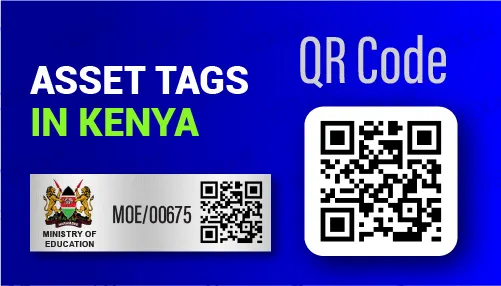
QR code asset tags let anyone with a smartphone identify an asset and open its record in seconds. We make QR code aluminium asset tags in Nairobi: anodized aluminium tags printed with your logo, a readable asset number and a QR code that points to the asset's record, location or service history.
Why choose QR code asset tags
- No special scanner needed. Any modern phone camera reads a QR code.
- More information in less space. A QR code can hold a full web link or a long asset ID on a small tag.
- Readable when partly damaged. QR codes include error correction, so a scratched corner often still scans.
- Links to live data. The code can open a page in your asset management system that shows the latest status, not just a number.
- Useful beyond audits. Staff can report a fault, request maintenance or check the user manual from the same code.
What to encode in the QR code
| Option | How it works | Best for |
|---|---|---|
| Asset number only | The scan returns the tag number, which your software looks up | Organisations with an existing register or scanner app |
| Web link (URL) | The scan opens a page for that asset | Cloud asset systems and field teams |
| Link + number | Tag shows the printed number; the QR opens the record | Most projects, works online and offline |
If you use our asset management software, each QR code can open the asset's record directly. Our guide to how QR code asset tracking works explains the setup step by step.
Why QR codes on aluminium
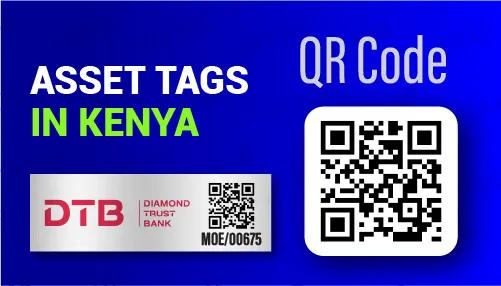
A QR code is only useful if it survives. On anodized aluminium the code is sealed into the metal, so it resists cleaning, abrasion, heat and sunlight far better than paper or vinyl stickers. That makes QR aluminium tags suitable for furniture, equipment, vehicles and outdoor assets. See why aluminium tags last.

QR code or barcode?
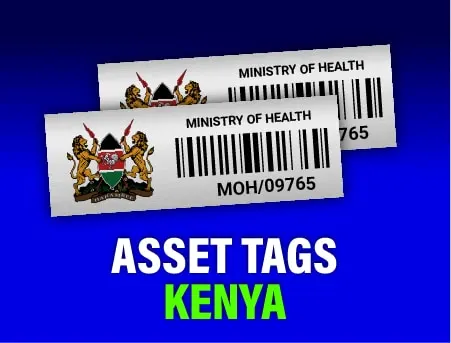
Choose QR codes when staff will scan with phones, when you want to link to online records, or when tags are small. Choose barcodes when your existing scanners or software expect linear barcodes. Many clients print both on one tag. For a wider comparison, read barcode vs QR vs RFID asset tags.

Where QR code asset tags are used
Schools and universities tracking lab and ICT equipment, hospitals logging maintenance of medical devices, NGOs managing assets across field offices, county governments verifying assets for audits, and companies managing laptops issued to staff.
Setting up QR code asset tracking
- Decide what the QR opens: an asset number for your scanner app, or a web link to each asset's record.
- Choose a numbering format that works in your register and is printed as text next to the code.
- Pick the tag and fixing for each asset class, aluminium for durability, polyester for budget indoor items.
- Approve the proof; we test that every code scans.
- Tag and capture each asset's details, or let our team do it through our tagging service.
- Scan regularly during audits, moves and maintenance to keep records current.

Design tips for QR asset tags
- Keep a clear margin (quiet zone) around the QR code.
- Print the asset number in text as well, so the tag is usable without a phone.
- Use short links, they create simpler codes that scan faster.
- Choose matte silver or white backgrounds for the best contrast.
- Size the code for the scanning distance: larger for assets scanned from further away.
Real-world impact of QR code asset tagging
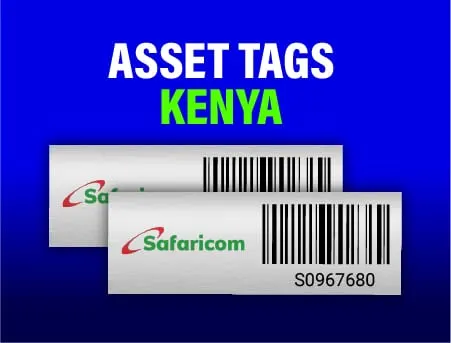
With QR tags, verification becomes a walk-through with a phone instead of a clipboard and spreadsheet. Staff can see who holds an item and when it was last serviced, maintenance teams can log work on the spot, and finance teams get a register that reflects what is really there. Read more in how asset tracking systems work.
QR code asset tags for every sector
| Sector | What the QR code opens |
|---|---|
| Schools and universities | Lab and ICT equipment records, room location, custodian |
| Hospitals | Device service history, calibration dates, fault reporting |
| NGOs and donor projects | Grant, donor and field office for each asset |
| County governments | Asset register entry for audits and IPSAS reporting |
| Companies | Laptop and equipment assignment to staff |
Tag sizes
Available in 39 x 13 mm (standard and recommended), 45 x 15 mm, 50 x 20 mm, 50 x 30 mm, 60 x 30 mm, 75 x 40 mm, 80 x 50 mm and 100 x 50 mm. We recommend 39 x 13 mm for most assets and a larger size where the tag carries a big logo or is scanned from a distance.
Ordering QR code asset tags
Send your logo, quantity and whether the QR should hold a number or a link. We prepare a free proof, test the codes and produce the tags in sequence. We can also carry out the full project through our fixed asset tagging service, including verification and a digital register.
Frequently asked questions
What are Aluminium Asset Tags with QR Code in Kenya used for?
Aluminium Asset Tags with QR Code in Kenya are used for tracking and managing physical assets such as machinery, IT equipment, tools, furniture, and inventory. The QR codes store essential asset data, while the aluminium material ensures long-term durability in harsh environments.
Why should I choose aluminium tags over plastic or paper ones?
Aluminium asset tags are highly durable, weather-resistant, and long-lasting. Unlike paper or plastic tags, QR Code Aluminium Asset Tags in Kenya can withstand heat, chemicals, abrasion, and outdoor conditions-making them ideal for industrial and commercial use.
How does scanning the QR code help with asset management?
When a QR code aluminium asset tag is scanned using a smartphone or tablet, it instantly displays stored asset information such as serial number, maintenance history, location, and owner details. This improves speed, accuracy, and real-time access to asset data.
Can QR Code Aluminium Asset Tags be customized with our company logo?
Yes, QR Code Aluminium Asset Tags in Kenya can be fully customized. We offer options to include your company logo, branding, serial numbers, color coding, or even dual-language text, depending on your asset tagging requirements.
What industries benefit most from QR Code Asset Tags in Kenya?
The Aluminium Asset tags are perfect for use in manufacturing, construction, education, healthcare, logistics, NGOs, and government sectors-anywhere assets need to be tracked, maintained, and verified regularly.
Do I need special software to use QR Code Aluminium Asset Tags?
No special software is required to scan the tags-any smartphone or tablet with a QR code scanner can read them. However, for advanced features like real-time updates or integration with asset management systems, we offer compatible software solutions upon request.
How long do QR Code Aluminium Asset Tags last?
When properly applied, QR Code Aluminium Asset Tags in Kenya can last 5 to 10 years or more, even in challenging environments. Their resistance to wear and tear ensures readability throughout the asset’s lifecycle.
Can I link the QR code to an online asset register or cloud database?
Absolutely. QR Code Aluminium Asset Tags in Kenya can be encoded with URLs or dynamic QR codes that link directly to cloud-based asset registers, maintenance logs, or equipment databases for real-time updates and remote access.
Order online

Helpful guides
Guide, 2 min read
Aluminium Asset Tags: Uses and Specifications
Learn where aluminium asset tags work well and what to specify for size, numbering, barcode, finish and attachment in Ke…
Guide, 13 min read
Acetone-Activated vs Riveted Aluminium Asset Tags: Which Installation Method Is Best?
Acetone-activated adhesive or rivets? Compare bond strength, surfaces, cost and removal risk to pick the right installat…
Guide, 2 min read
The Lifecycle of Aluminium Asset Tags
How aluminium asset tags are made and used: anodizing, printing, sealing, application, scanning and retirement, with typ…