Guide, 2 min read
Fixed Asset Tagging Checklist
Use this fixed asset tagging checklist to prepare staff, asset data, tag specifications, site access, verification and p…
 View Samples
 A practical fixed asset verification and tagging guide for SMEs: counting, tagging, building the register and keeping it audit-ready in Kenya.
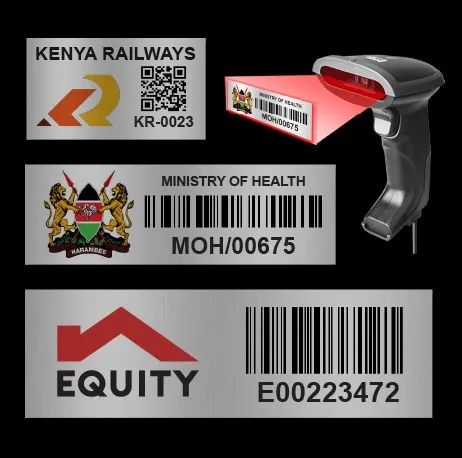



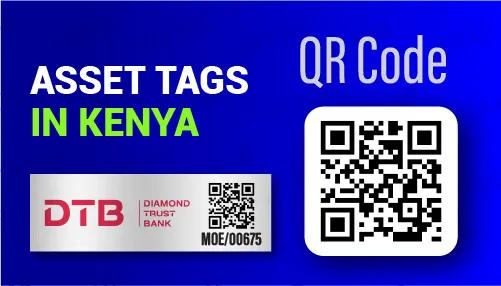
For a growing Kenyan SME, knowing exactly what the business owns becomes increasingly difficult as computers, furniture, machinery, vehicles and other equipment accumulate. Fixed asset tags businesses use provide a practical way to give every significant asset a unique physical identity and connect it to an accurate office asset register.
A structured tagging system does not need to be complicated or expensive. A small business can begin with a simple inventory, assign unique identification numbers, select barcode or QR technology, apply suitable tags and connect the resulting records to its accounting or asset tracking software.
The objective is straightforward: know what you own, where it is, who is responsible for it and what condition it is in.
Many businesses start with a basic spreadsheet containing equipment purchases. That may work when the company has ten computers and a few desks.
The problem appears when the business grows.
A Nairobi startup may move from one office to another, hire dozens of employees, establish a second branch and purchase additional laptops, monitors, printers and networking equipment.
Without a consistent identification system, management can quickly lose track of individual assets.
A proper tagging system creates a link between:
Physical asset → Asset tag → Asset register → Accounting records
This makes physical verification much easier.
It also gives management greater visibility over assets that may otherwise be misplaced, transferred without documentation or forgotten.
Fixed asset verification is the process of physically checking whether assets recorded in an organisation’s records actually exist and whether their details are accurate.
A verification exercise can confirm:
For an SME, this does not need to be a complicated annual audit.
A simple physical check can identify problems before they become expensive.
For example, an office asset register may show 50 laptops.
During verification, the company might discover:
That information gives management an opportunity to investigate and update its records.
The first step is assigning every asset a unique identification number.
For example:
| Asset Type | Example Asset ID | Identification |
|---|---|---|
| Laptop | IT-LAP-0001 | QR code |
| Printer | IT-PRN-0002 | Barcode |
| Office desk | FUR-DSK-0003 | Sequential number |
| Generator | OPS-GEN-0004 | Aluminium barcode |
| Vehicle | FLT-VEH-0005 | Aluminium QR code |
The numbering system should be consistent.
Avoid creating separate numbering systems for every department unless there is a strong operational reason to do so.
A central numbering structure makes it easier to manage assets as the organisation expands.
Before ordering tags, find out what you already own.
This is the foundation of the entire system.
Walk through the business premises and record every asset that should be included.
Depending on your organisation, this could include:
Do not rely entirely on the existing accounting records.
The purpose of the initial inventory is to establish what physically exists.
For each asset, capture information such as:
You can start with a spreadsheet before moving to dedicated asset tracking software.
Once the physical inventory is complete, compare it against your accounting records.
You may discover three broad categories.
These are straightforward.
Verify the information and proceed with tagging.
Investigate these assets.
They may have been:
These require investigation as well.
They may have been purchased recently, transferred from another location or never properly added to the register.
Do not simply add unexplained assets without reviewing their ownership, acquisition and accounting treatment.
The next decision is how employees will identify assets.
The two most practical options for many SMEs are barcodes and QR codes.
| Feature | Barcode | QR Code |
|---|---|---|
| Scanning | Scanner/mobile device | Smartphone/mobile device |
| Data capacity | Lower | Higher |
| Ease of use | Simple | Very simple |
| Office assets | Excellent | Excellent |
| Digital records | Excellent | Excellent |
| Direct mobile access | Depends on system | Convenient |
| Best for | Straightforward identification | Richer digital workflows |
A barcode is often sufficient when the objective is simply to identify an asset using a unique number.
QR codes can be useful when the organisation wants employees to access digital asset information using mobile devices.
The best option depends on the asset tracking software being used.
Tag material should be selected according to the environment.
Not every SME needs aluminium.
For a laptop in an air-conditioned office, a durable synthetic label may be perfectly adequate.
For a generator operating outdoors, the requirements are different.
Consider:
Suitable options may include:
Consider:
Anodized aluminium can provide better resistance to UV exposure, abrasion and harsh environmental conditions.
This makes it useful for vehicles, generators, machinery and outdoor equipment.
A good asset tag should contain enough information to identify the asset without becoming unnecessarily complicated.
A typical design might include:
Company Name
Asset ID: VEX-IT-00452
QR Code
You can also include:
Avoid overcrowding the tag.
The most important information is the unique asset identifier and a machine-readable code if scanning is required.
Tag placement matters.
The tag should be:
For office computers, the tag can be placed in a consistent position.
For machinery, select a location that is visible during inspection but protected from direct impact.
For vehicles, use a durable tag and position it where it can be accessed during verification.
For outdoor assets, consider environmental exposure before choosing the material and installation method.
A company with multiple offices should use the same basic tagging principles across all locations.
For example:
NAI-IT-0001 could represent an asset in Nairobi.
MSA-IT-0002 could represent an asset in Mombasa.
However, avoid embedding too much information into the asset number.
A central sequential identifier is often easier to maintain.
The location should ideally be stored as a separate field in the asset register.
This becomes important when an asset moves.
If a laptop moves from Nairobi to Mombasa, its asset number should not need to change.
Only the location record needs to be updated.
Tagging alone does not create accountability.
Each significant asset should have a responsible person, department or location.
For example:
| Asset | Custodian | Location | Status |
|---|---|---|---|
| Laptop 001 | Finance Manager | Nairobi | Active |
| Laptop 002 | Sales Executive | Nairobi | Active |
| Printer 003 | Administration | Nairobi | Active |
| Generator 004 | Operations | Warehouse | Active |
This makes follow-up easier when an asset cannot be located.
It also creates clearer responsibility when assets are transferred between employees.
Once the physical tagging is complete, the information needs to exist somewhere useful.
A small business can begin with a spreadsheet.
As the organisation grows, asset tracking software can provide more sophisticated capabilities.
Depending on the system, you may be able to manage:
The important principle is consistency.
The asset number on the physical tag should match the identifier in the digital system.
Asset management and accounting should work together.
Your accounting system may contain information such as:
The asset management system can add operational information such as:
These systems do not necessarily have to be the same platform.
What matters is that the identifiers can be reconciled.
A unique asset number provides the bridge.
Tagging should not be a one-time project.
Set a verification schedule appropriate to the size and risk profile of the organisation.
For example:
During each exercise, scan or record the asset tag and confirm the information.
Mark discrepancies for investigation.
Asset loss does not always mean theft.
Assets can disappear from records because of poor administration.
A laptop can be transferred between employees without updating the register.
A printer can move between offices.
A generator can be sent to a project site and never recorded at its new location.
A piece of equipment can be disposed of but remain in the accounting records.
A physical identification system makes these movements easier to track.
The tag provides a reference that follows the asset throughout its lifecycle.
Start before the asset base becomes difficult to manage.
A startup does not need hundreds of assets before implementing basic controls.
If a company has:
it already has enough assets to justify a structured register.
Starting early has another advantage.
The business can establish good habits before rapid growth creates complexity.
When the company opens another office or hires 100 additional employees, the asset management process is already established.
Office moves are one of the easiest ways to lose asset visibility.
Before moving:
A tagged laptop is easier to identify than a laptop described simply as “Dell computer.”
This is especially useful when multiple devices have similar specifications.
A reliable asset register can support broader financial controls.
Businesses may need to demonstrate the existence and ownership of assets during financial reviews, audits or tax-related processes.
Physical tags do not replace invoices, accounting records or tax documentation.
However, they can help establish a clear physical connection between the asset and the relevant record.
For SMEs in Nairobi, this can make physical verification considerably more organised.
Know what you own before ordering thousands of labels.
Every asset should have a unique identifier.
Do not use an indoor sticker on equipment exposed to harsh outdoor conditions.
Avoid areas exposed to constant impact, heat or abrasion.
Moving an asset without updating its location creates inaccurate records.
The register should be supported by physical verification and clear responsibilities.
An accurate register today can become inaccurate after months of transfers and disposals.
Use this checklist during your next physical inventory:
This simple process can significantly improve the quality of your office asset register.
The best tag depends on the asset.
For indoor office equipment, durable synthetic labels can provide an economical solution.
For machinery, generators, vehicles and equipment exposed to UV, dust, moisture and abrasion, anodized aluminium can provide a more durable alternative.
The installation method also matters.
A suitable adhesive may work well on a clean, smooth surface, while mechanical fastening may be appropriate for certain heavy-duty applications.
The objective is to select a complete tagging solution that remains readable and securely attached for the expected life of the asset.
SMEs can implement a basic system without turning it into a major project.
Identify and record all significant assets.
Compare the physical inventory with existing accounting records.
Assign asset numbers and apply barcode or QR tags.
Load the information into your asset tracking software or structured register and establish verification procedures.
After implementation, make tagging part of the normal procurement process.
Every new significant asset should be registered and tagged before being assigned to an employee or department.
Asset management becomes harder when businesses wait until they have hundreds or thousands of assets.
A simple system implemented early can provide a strong foundation for growth.
Start with an accurate physical inventory.
Assign unique identifiers.
Choose barcode or QR technology based on your workflow.
Select tag materials according to the environment.
Apply tags consistently.
Connect them to your office asset register and accounting records.
Then verify the assets regularly.
For Kenyan SMEs, this approach can improve accountability while providing better visibility over the equipment that supports daily operations.
If your business is struggling to track laptops, office equipment, machinery, vehicles or other fixed assets, the first step is to establish a reliable physical identification system.
Request a quote or order a free sample pack of fixed asset tags businesses can test before committing to a full rollout.
Test the tag material, barcode or QR readability, adhesive performance and placement on your actual equipment.
A well-designed asset tagging system gives your business something simple but valuable: a reliable way to know what you own, where it is and which record belongs to it.
Prev Previous Fleet & Heavy Equipment Asset Tagging for Logistics and Construction Firms in KenyaBranded Mousepads, Product Stickers & Labels , Reflector Jackets , Roll-Up Banners, Sellotapes Branding, Staff ID Cards, Wheel Covers Branding, Presentation Folders, Letterhead Printing, Diaries Printing, Vehicle Branding, Jerseys Printing, Booklets Printing, Posters Printing, Leaflets Printing, Brochure Printing, Flyers Printing, Notebook Printing, Spiral Bound Booklet, Reflective Stickers, Pop-up Banners, Umbrella Branding, Book Printing, Metallic Door Signs, 3D LED Signs, Asset Tags, Bookmarks Printing, Custom Tapes, Telescopic Banners, Mounted Photos, Floor Stickers, Business Cards, Custom Posters, Calendar Printing, Water Bottles Mugs Branding Envelopes Printing Tear-Drop Banner Backdrop Banner Funeral Programs Feather Flags Certificate Printing Polo Shirts Trophies & Awards Spiral Notebooks Annual Reports Plaques Staff Nametags Branded Keyholders Snapper Frames Stationery Giveaways Button Badges Fridge Magnets Laptop Bags Samples Laser Asset Tagging
Yes. Even a small register benefits from tags because audits, insurance claims and loss prevention all depend on identifying assets.
A complete physical inventory: list every asset, where it is and who uses it.
Often yes for small registers. As assets and locations grow, asset management software saves time.

Written by the Vexar Solutions team
We have made aluminium asset tags and carried out asset tagging for Kenyan organisations since 2016. About us.
Guide, 2 min read
Use this fixed asset tagging checklist to prepare staff, asset data, tag specifications, site access, verification and p…
Guide, 13 min read
How KRA wear-and-tear allowances depend on a verifiable asset register, and how physical asset tags support capital allo…
Guide, 4 min read
Fixed asset verification explained: physical counts, tagging, reconciling the register and reporting for audits, with a …
Need asset tags or printing in Kenya?
Send your quantity and artwork. We reply with a quote and a free proof, usually within the hour.